


Think of India’s startup ecosystem as a bustling marketplace. Thousands of founders launch, raise seed capital, build teams, and chase product‑market fit. Yet when it comes to exits, the signals are misaligned. Deals are opaque, timelines are long, and too many entrepreneurs walk away without ever realising the value they created. Done Deal is synchronising these signals, building a founder‑first, data‑driven marketplace that makes exits and acquisitions a natural, accessible part of the startup journey and not a rare stroke of luck.
The Problem: Great Startups, Broken Exit Paths
India sees hundreds of seed‑stage deals every year, but only a small fraction of those companies go on to large venture rounds or IPOs. For the rest, the path to liquidity is fragmented and unclear. Founders often do not know whom to talk to, how to value their business, or how to even signal interest in being acquired without hurting morale or market perception.
Traditional M&A is built for large deals, not for sub‑100 crore, sub‑10 million dollar internet‑first businesses that form the bulk of the ecosystem. Investment banks, big advisory firms and corporate development teams tend to focus on big-ticket transactions with retainers and high fees, leaving smaller but high‑potential startups to navigate exits through informal networks, cold outreach and chance introductions.
This creates four structural bottlenecks for founders:
- Discovery: Serious buyers and promising startups struggle to find each other in a structured way.
- Access: Early‑stage founders lack access to the right advisors, lawyers, and deal know-how when a potential acquisition is on the table.
- Process: Legacy, relationship‑heavy processes can drag on for many months and distract founders from running their business.
- Stigma: Declaring “we’re open to being acquired” is often perceived as a sign of failure, which discourages founders from exploring exits early and thoughtfully.
Without fixing these issues, India risks building a vibrant early‑stage pipeline with a weak exit engine—leaving value on the table for founders, employees, and early investors.
Enter Done Deal: Making Starting Up Worth It
Done Deal is a digital marketplace that makes it simple for startups to explore acquisitions and strategic investments while staying anonymous and in control. Its core mission is captured in a single line: make starting up worth it—for founders, employees, and early backers who take the riskiest bets.
On the platform, internet‑first startups—across D2C, SaaS, fintech, gaming, AI and other digital categories—can list themselves anonymously, share structured business data, and signal whether they are open to conversations, actively looking to be acquired, or simply curious about their “today value.” On the other side, scale‑up startups, traditional businesses, venture capitalists and financial sponsors can specify the profiles they want—sector, revenue band, customer base, margins, founder involvement—and receive curated, standardised opportunities that match those guardrails.
Think of it as a purpose‑built operating system for startup M&A: discovery, evaluation and first conversations are software‑driven, while the human relationship‑heavy parts—fit, vision, culture—are preserved for the final stages of the journey.
Done Deal has enabled significant transactions such as WLDD’s acquisition of ScoopWhoop, closed end‑to‑end in just three weeks, and Heritage Foods’ majority stake buy in healthy dessert brand Get A Whey.
The Engine: Data‑Driven, Always‑On
The heart of Done Deal is its data engine. Founders answer a focused set of questions, which the platform extrapolates into a richer set of 20‑plus data points that benchmark the startup against peers in its category. For a D2C personal care brand, for example, this means anonymised insights on where it stands versus similar two‑year‑old brands on metrics such as revenue, repeat customers, margins and growth.
From this, Done Deal generates a “today value”—a grounded sense of what the company could be worth in the current market, without over‑promising or anchoring on aspirational future numbers. Startups can plug in tools like Shopify, Razorpay and accounting/MIS systems, allowing the platform to access near real‑time business performance rather than static snapshots.
For buyers, this transforms the experience. Instead of sifting through decks and one‑off introductions, they see standardised, comparable opportunity cards—anonymised profiles such as “D2C company in Mumbai with monthly revenue of X and Y paying customers”—that can be filtered and prioritised. Interest is signalled through the platform, and founders retain the choice of when, how, and with whom to reveal their identity and deeper information.
The Team: Founders Who’ve Been There
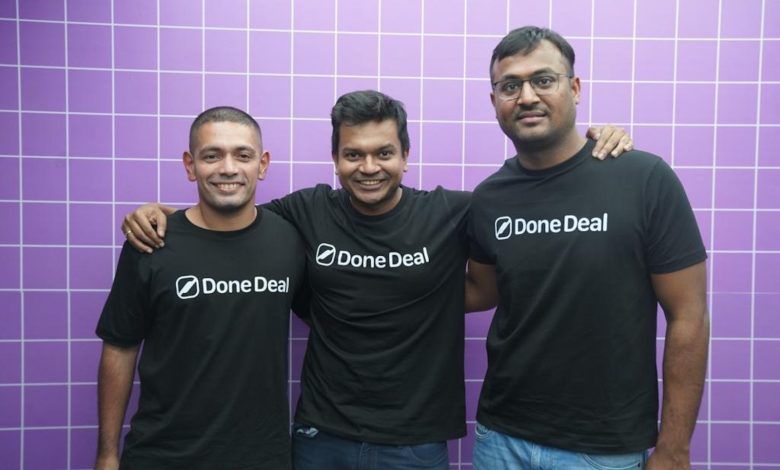
Done Deal is built by people who have sat on every side of the table—entrepreneurs, investors and product‑tech leaders.
Co‑founder Rohit Raj is a two‑time founder who built and exited Glitch and Chtrbox, giving him first‑hand experience of how long, opaque and emotionally demanding acquisition processes can be. Across both exits, he saw how critical timing, preparation, and the right partners are in turning years of founder effort into meaningful liquidity for teams and investors.
Co‑founder Aneesh Sivakumar brings a decade‑plus investing career across institutions like Kotak and KKR, where he worked closely with traditional businesses, PE‑backed platforms and boardrooms for whom M&A is a core growth lever. He understands how larger companies think about acquiring innovation, talent and new categories, and why they struggle to access smaller, undiscovered deals at scale.
Co‑founder Ankur Jain is the tech and product backbone of Done Deal, bringing deep experience in building high‑throughput, transaction‑heavy platforms from roles at Dotpe and CARS24. At Done Deal, Ankur leads product and technology, turning the founding vision into a secure, scalable marketplace that can handle sensitive data and sophisticated matching with speed and stability.
The experience shows up in how Done Deal is designed: integrations, configurability and scale are baked into the product from day one.
Impact: Who Wins With Done Deal?
The ripple effects of a functioning, founder‑first exit marketplace are significant:
- Founders and teams: Thoughtful, timely exits turn years of work into liquidity, reduce the emotional burden around “shutting down,” and create financial cushions for second and third‑time entrepreneurs to build again.
- Early investors and angels: A deeper and more predictable exit funnel improves portfolio returns even when companies do not reach unicorn scale, making early‑stage capital more sustainable.
- Strategic buyers: Corporates, PE‑backed platforms and growth‑stage startups gain structured access to innovation, products and talent that would otherwise remain hidden or hard to engage.
- The broader ecosystem: As more meaningful exits happen at smaller scales, India’s startup flywheel accelerates—experience, capital and talent recycle back into the ecosystem faster.
The Vision: From Deals to a New Default
Done Deal’s ambition is to make exit strategy as normal and planned as fundraising in every founder’s playbook. Over time, this foundation can support adjacent offerings around secondary liquidity, structured financing and broader founder services, all anchored in the same principle: use data, software and empathy to make starting up truly worth it.
At Gruhas, the thesis is simple: India’s future is being built by founders who tackle structural gaps with deep insight and scalable solutions. Done Deal is one of them, creating the missing infrastructure for startup exits, so that the next generation of entrepreneurs can build boldly, knowing there is a clear, dignified path to value at the other end of the journey.