


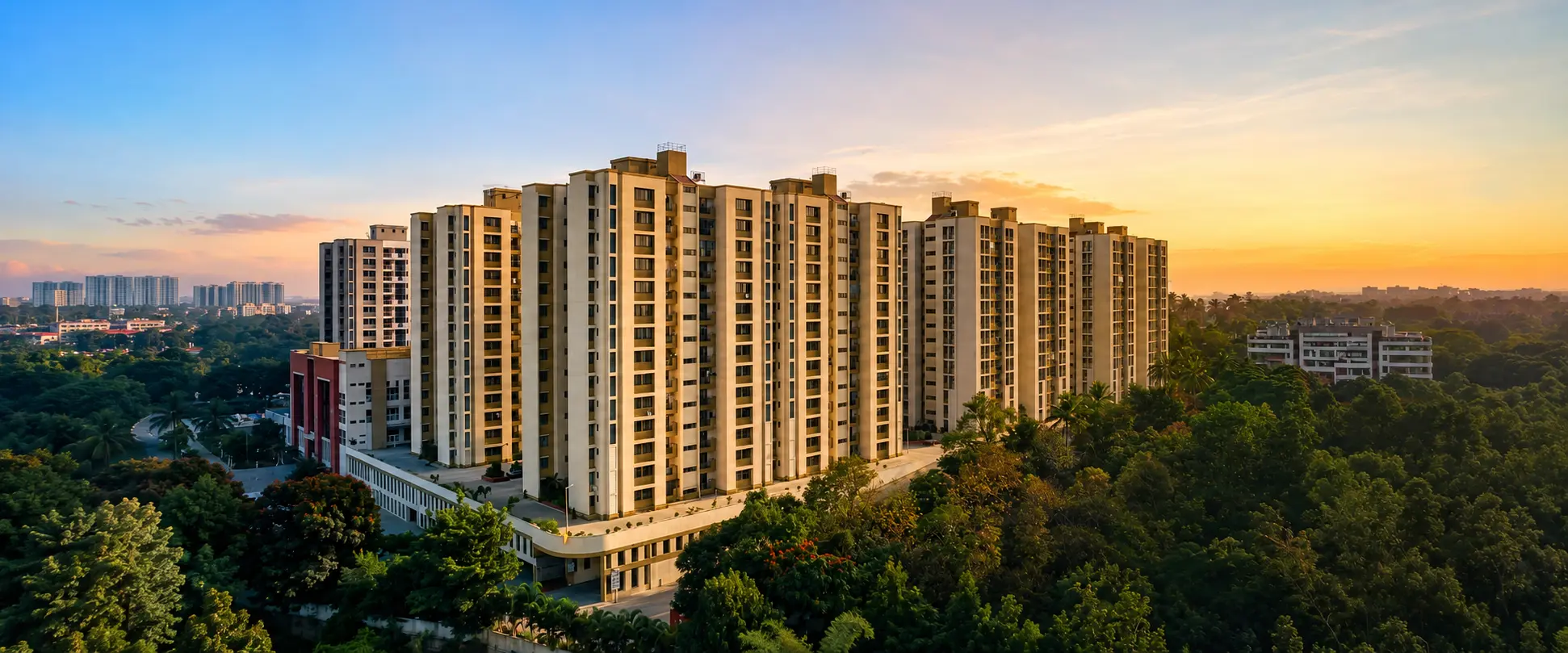
There is a strange contradiction unfolding in India today. We have become remarkably good at helping people live longer, yet we have spent surprisingly little time thinking about what those extra years should actually look like.
Every day, thousands of Indians retire after spending four decades building careers, raising families, buying homes and accumulating wealth. Collectively, they represent one of the largest demographic transitions the country has ever experienced. India today is home to more than 150 million senior citizens, a number expected to more than double over the next three decades. Yet despite the sheer scale of this shift, surprisingly little attention has been paid to what those additional years should actually look like. We have built financial products to help people prepare for retirement, healthcare systems to help them live longer and insurance products to protect them against illness. What we have not built, at least not at any meaningful scale, is the infrastructure that enables people to continue living purposeful, independent and socially fulfilling lives after they retire.
Perhaps that is because we have spent too long treating ageing as an inevitable decline rather than as another stage of life.
The End of the Traditional Caregiving Model
For generations, the answer to growing old in India seemed almost predetermined. Parents remained in the family home, children gradually assumed the responsibilities of caregiving and the joint family absorbed the invisible labour required to make the arrangement work. It was never a perfect system, but it was one that relied on proximity. Families lived together, routines overlapped and support emerged naturally from everyday life.
That world no longer exists for a growing number of Indians.
Children increasingly build careers in different cities, sometimes different countries. Families have become smaller. Women, who have historically carried much of the burden of caregiving, are pursuing careers of their own. At the same time, the generation entering retirement today bears little resemblance to the one before it. They have travelled extensively, built businesses, managed teams, embraced technology and accumulated significant wealth. Many are healthier, more active and likely to live twenty or thirty years beyond retirement. They are not looking for someone to look after them. They are looking for a life that continues to feel meaningful after work is no longer the defining structure around which every day revolves.
The challenge is that our infrastructure has failed to keep pace with that aspiration.
Reimagining What Senior Living Means
When most Indians hear the phrase senior living, they instinctively think of an old-age home, a place associated with dependence, abandonment and family failure. The category has inherited decades of cultural baggage, making it difficult to imagine that choosing where and how to spend one's retirement could ever be an aspirational decision. Yet across much of the world, that transformation has already taken place. Retirement communities are no longer viewed as institutions of care, but as communities designed around independence, preventive health, social engagement and dignity. The underlying premise is remarkably simple: if childhood, adulthood and parenthood each have environments intentionally designed around their unique needs, why should retirement be any different?
This is precisely the question that drew us to Primus Senior Living.
At first glance, Primus appears to operate within real estate. Scratch a little deeper and it begins to resemble healthcare. Spend more time understanding the company and it becomes clear that it is neither. Primus is attempting to solve a far more fundamental problem: not how India cares for its elderly, but how India ages.
That distinction may sound semantic, but it fundamentally changes where one looks for the problem.
The Invisible Decline Curve: Ageing Begins Before Healthcare Does
Most of us assume ageing begins with a dramatic event—a fall, a stroke, a diagnosis or a prolonged hospital stay. Medical interventions are built around these moments because they are visible and measurable. Yet the real decline often begins years earlier, long before any doctor becomes involved. It starts quietly, almost invisibly, with small behavioural changes that seem too insignificant to matter in isolation. A parent who no longer feels comfortable driving after sunset. Someone who gradually stops cooking because domestic help has taken over the kitchen. A father who once made every household decision instinctively but now begins asking his children for reassurance over the smallest purchases. A grandmother who slowly withdraws from social gatherings because participating feels just a little more exhausting than it once did.
None of these moments, taken individually, appear particularly alarming. Most families dismiss them as natural consequences of ageing. Yet collectively, they point towards something much more profound. They represent the gradual erosion of confidence, independence and purpose, the slow transition from living independently to simply being looked after.
Adarsh Narahari, the founder of Primus, describes this phenomenon as the Invisible Decline Curve. The phrase captures something that is surprisingly difficult to articulate yet immediately recognisable once observed. Decline rarely announces itself through one catastrophic event. More often, it accumulates through dozens of tiny compromises that gradually reshape the way a person lives. The tragedy is that families usually recognise this pattern only in hindsight. By the time the first major medical event occurs, years of reduced mobility, diminished confidence and social isolation have often already taken their toll.
Healthcare, almost by definition, intervenes after decline has become visible.
Primus asks whether that decline can be prevented much earlier.
The Dependency Risk Spiral: When Care Accidentally Creates Dependence
One of the most compelling aspects of Primus is that its philosophy challenges one of the deepest assumptions most families hold about caring for ageing parents – that making life easier is always the same thing as making life better.
Few ideas illustrate this better than what Adarsh calls the Dependency Risk Spiral.
The premise is deceptively simple. As parents grow older, children naturally begin removing inconveniences from their lives. They hire drivers so their parents no longer need to navigate traffic. They employ cooks because standing in the kitchen feels unnecessarily tiring. Household staff take over grocery shopping, cleaning and errands, while children increasingly step in to make financial or administrative decisions because it feels more efficient. Every one of these decisions comes from a place of love. Every one of them appears rational in isolation.
Yet together they can create an unintended consequence.
The everyday activities that once kept people physically active, mentally engaged and emotionally confident gradually disappear from their lives. Walking to the market is replaced by home delivery. Cooking gives way to convenience. Decision-making slowly shifts to someone else. Without ever intending to, families begin substituting independence with assistance.
Ageing, therefore, becomes accelerated not simply by biology but by behaviour.
Designing for Independence, Not Just Comfort
This insight is reflected throughout Primus in ways that are almost invisible until someone points them out. Staff members are trained not to automatically perform tasks on behalf of residents, but to encourage participation wherever possible. The objective is not to eliminate effort from everyday life but to preserve just enough of it that residents continue exercising the muscles, routines and judgement that keep them independent. A seemingly mundane interaction asking, "Can I help you do this?" rather than "I'll do it for you," encapsulates an entire philosophy of care.
Primus is not really in the business of selling homes. The homes are simply the physical infrastructure upon which a much larger operating model is built. At its core, the company is designing environments that actively slow the Invisible Decline Curve rather than merely responding to its consequences.
This philosophy extends far beyond architecture. It shapes the services residents receive, the way healthcare is delivered and even the materials used within every home. Common spaces are designed to maximise chance interactions because social engagement is treated as preventive healthcare rather than recreation. Wellness programmes focus on maintaining strength and mobility long before medical intervention becomes necessary. Care teams are incentivised to preserve independence rather than create reliance. Every seemingly small design decision is informed by a single question: does this enable someone to continue living on their own terms for longer?
Marzi: Building a Community for Life After 50, to live life on their own terms.
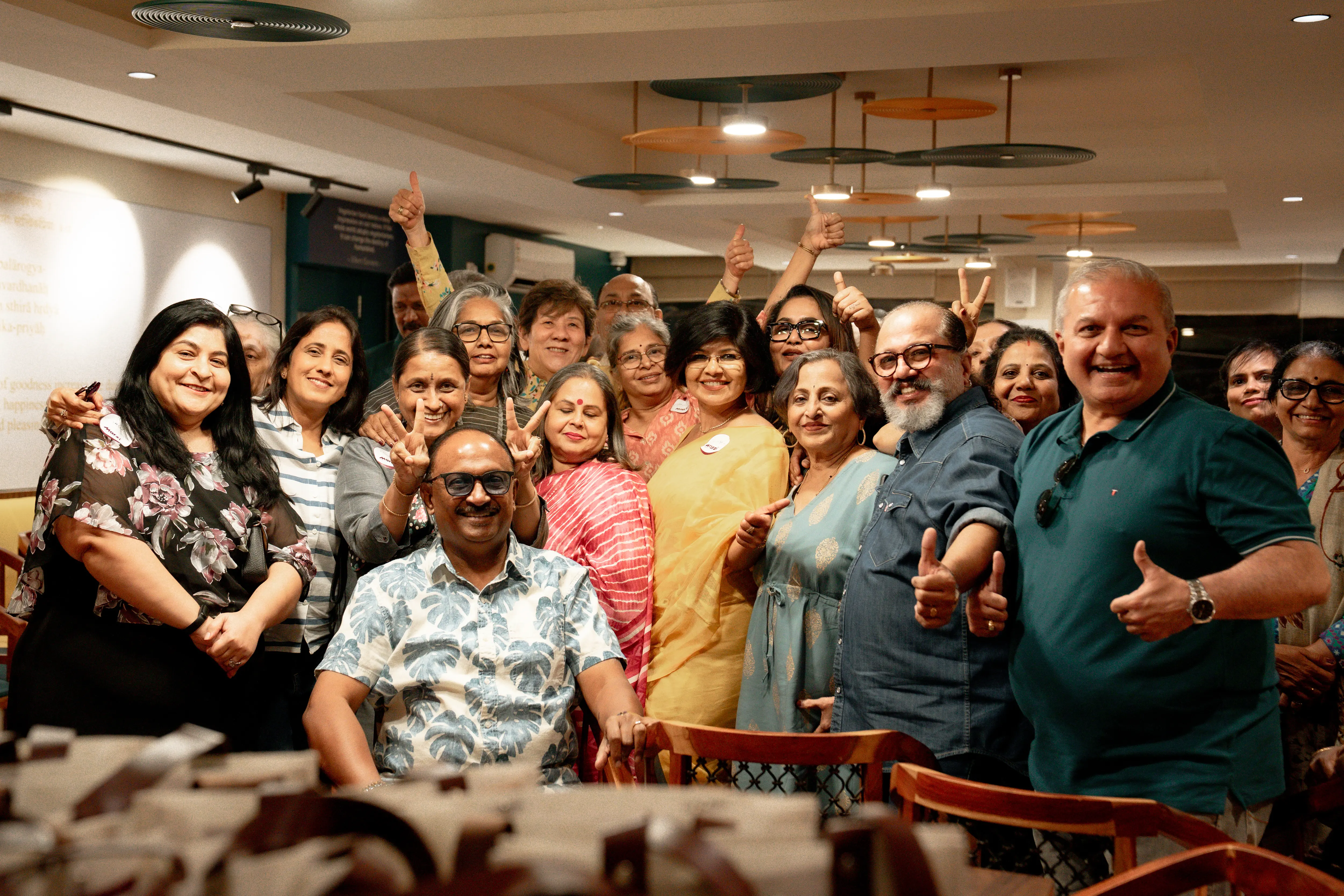
The same philosophy extends beyond senior living communities through Marzi, Primus’ premium community platform created for the “Generation Evergreen.” Individuals above 50 who view this chapter of life not as a period of slowing down, but as an opportunity to explore more, connect meaningfully and continue living fully.
At its core, Marzi is built around one of the most overlooked aspects of ageing: the importance of belonging. As professional identities evolve and traditional routines change, many individuals find themselves seeking new communities, friendships and experiences that reflect who they are today. Marzi creates a space where like-minded people can come together, build meaningful connections and participate in experiences designed around their interests and aspirations.
Through curated group meetups, events, activities and community-led experiences, Marzi enables members to discover new interests, form friendships and remain actively engaged with the world around them. This extends to travel as well, through Marzi Holidays, senior-first trip planning with curated, comfortably paced itineraries across India and abroad. Every journey comes with dedicated Travel Mitr support, from planning and preparation to on-trip assistance, so members can explore confidently and at their own pace.
The underlying belief is simple: ageing well is not only about maintaining health and independence; it is also about having a sense of purpose, connection and joy. Marzi reimagines this phase of life as one defined not by what is left behind, but by everything that is still waiting to be explored.
From Vision to Infrastructure: Building the Future of Ageing in India
What started as a deeply personal observation has gradually evolved into the creation of an entirely new category for India. Primus’ recent partnership with HDFC Capital to develop senior living communities across the country represents more than just the expansion of a single company; it marks the beginning of senior living moving from the fringes of Indian real estate into the mainstream of residential infrastructure.
For Adarsh Narahari, this journey began with a simple but deeply personal trigger — a request from his grandmother that made him question why India had so few environments designed around the needs and aspirations of older adults. In the early days, the idea was far from obvious. He even had to convince his own bankers not to convert his first project into a conventional apartment development, a reflection of how unfamiliar the category was at the time.
Yet what began as a single sold-out project in Bengaluru has evolved into a broader vision: building the platform that helps establish senior living as a recognised residential asset class in India, not a niche alternative.
As India’s demographic profile changes, the conversation around ageing is beginning to shift. Retirement communities are no longer simply viewed as specialised housing products or care facilities; they are emerging as essential social infrastructure for a generation that expects more from its later years.
That, ultimately, is what convinced us.
Primus is not asking India to confront the inevitability of ageing. That reality is already upon us. Instead, it is asking a far more ambitious question: if retirement is likely to represent nearly a third of an individual’s adult life, shouldn’t those years be designed with the same thoughtfulness, dignity and aspiration as every stage that comes before them?
Good senior living is not about adding years to a life. It is about ensuring those years continue to feel like your own.
That is the bet Adarsh made in 2014, before there was a recognised market, before there was institutional capital, and before senior living was even a defined category in India. We are fortunate to be backing him at a time when that vision is beginning to become reality.